
Dashboard Phone Mount Dangers: What Drivers Should Know
You just installed a new dashboard phone mount last week. It seemed perfect — stable, within reach, great viewing angle. But here's what most drivers don't realize: that innocent-looking gadget could be blocking critical safety features, damaging your dash, or even becoming a projectile in an accident.
Dashboard mounts have become a popular alternative to windshield mounts. But before you slap another adhesive pad on your dash, there are some serious concerns you need to understand. Let's dig into what makes dashboard mounts problematic — and what actually works better.
Why Dashboard Mounts Aren't as Safe as They Seem
Dashboard mounts feel like the obvious solution. They're not stuck to your windshield, they keep your phone up high, and they seem more secure than those flimsy vent clips. But the reality is more complicated.
They Can Interfere with Airbag Deployment
Here's the big one most people never consider: your dashboard isn't just empty space. Behind that smooth surface on the passenger side sits one of your car's most critical safety features — the passenger airbag.
An airbag deploys with tremendous force in a fraction of a second. Anything mounted on or near that surface can be thrown into the cabin. Your phone mount might weigh just a few ounces, but in a crash it can become a serious hazard. Check your owner's manual for where your airbags are before you mount anything to the dash.
Heat Damage Is a Real Problem
Your dashboard gets hot. Really hot. On a sunny summer day, it sits in direct sun behind the windshield — hot enough to weaken adhesive bonds and to make your phone uncomfortably warm.
Dashboard mounts with adhesive pads gradually lose their grip in these conditions. You might not notice the weakening until your phone takes a tumble mid-turn. And a phone baking in direct sun on the dash isn't doing its battery any favors either.
They Block Important Dashboard Features
Modern cars pack a lot of technology into the dashboard area. Depending on where you mount it, a dashboard phone mount can obstruct:
- Warning lights and indicators
- Climate control displays
- Fuel gauges and speedometer visibility
- Head-up display projections
- Dashboard cameras or sensors
You might think you've found the perfect spot, but consider every angle. Can your passenger see important information? What about when you're making a sharp turn and glancing down at your speed?
The Adhesive Problem Nobody Talks About
Let's talk about the elephant in the room: that sticky pad holding your mount to the dashboard.
Permanent Dashboard Damage
Those adhesive pads are strong — sometimes too strong. When you eventually remove your dashboard mount, you might be in for an unpleasant surprise. The adhesive can:
- Pull off dashboard coating or vinyl
- Leave permanent sticky residue
- Create discolored patches on your dash
- Reduce your car's resale value
If you lease your vehicle, that damage could show up in end-of-lease charges. Even if you own your car, a scarred dashboard isn't something most buyers want to see.
The Adhesive Fails When You Need It Most
Here's the cruel irony: adhesive dashboard mounts tend to fail at the worst possible times. Temperature swings work on the adhesive, weakening the bond. So your mount might hold steady for weeks, then suddenly let go during a sharp turn or a hard stop.
And it's never on a quiet street. It's when you need GPS directions most — merging onto a confusing highway, navigating an unfamiliar city, or trying to find a critical exit.
Legal Gray Areas You Should Know About
Phone and mount laws vary by state, and where you put your phone matters.
Placement Rules Are Specific
California is a good example of how precise these rules can be. A driver may use a phone by hand only if it's mounted on the windshield in the spots the law allows for a GPS, or "on or affixed to a vehicle's dashboard or center console in a manner that does not hinder the driver's view of the road," and only with a single swipe or tap (California Vehicle Code 23123.5). So a dashboard mount that sits in your line of sight can be a problem, while one that stays out of your view of the road isn't.
Check your own state's rules, keep the phone out of your view of the road, and set your route before you drive.
What Actually Works Better Than Dashboard Mounts
If dashboard mounts are problematic, what's the solution? You still want your phone in view for GPS, calls, and music.
Cup Holder Mounts: The Overlooked Alternative
The most underrated phone mounting solution sits right in your center console. A quality cup holder phone mount avoids the problems dashboard mounts create:
- No adhesive on your dashboard
- Nothing mounted on the dash over an airbag
- Out of the direct sun on top of the dash
- Doesn't cover dashboard displays or warning lights
- Easy to remove and move between vehicles
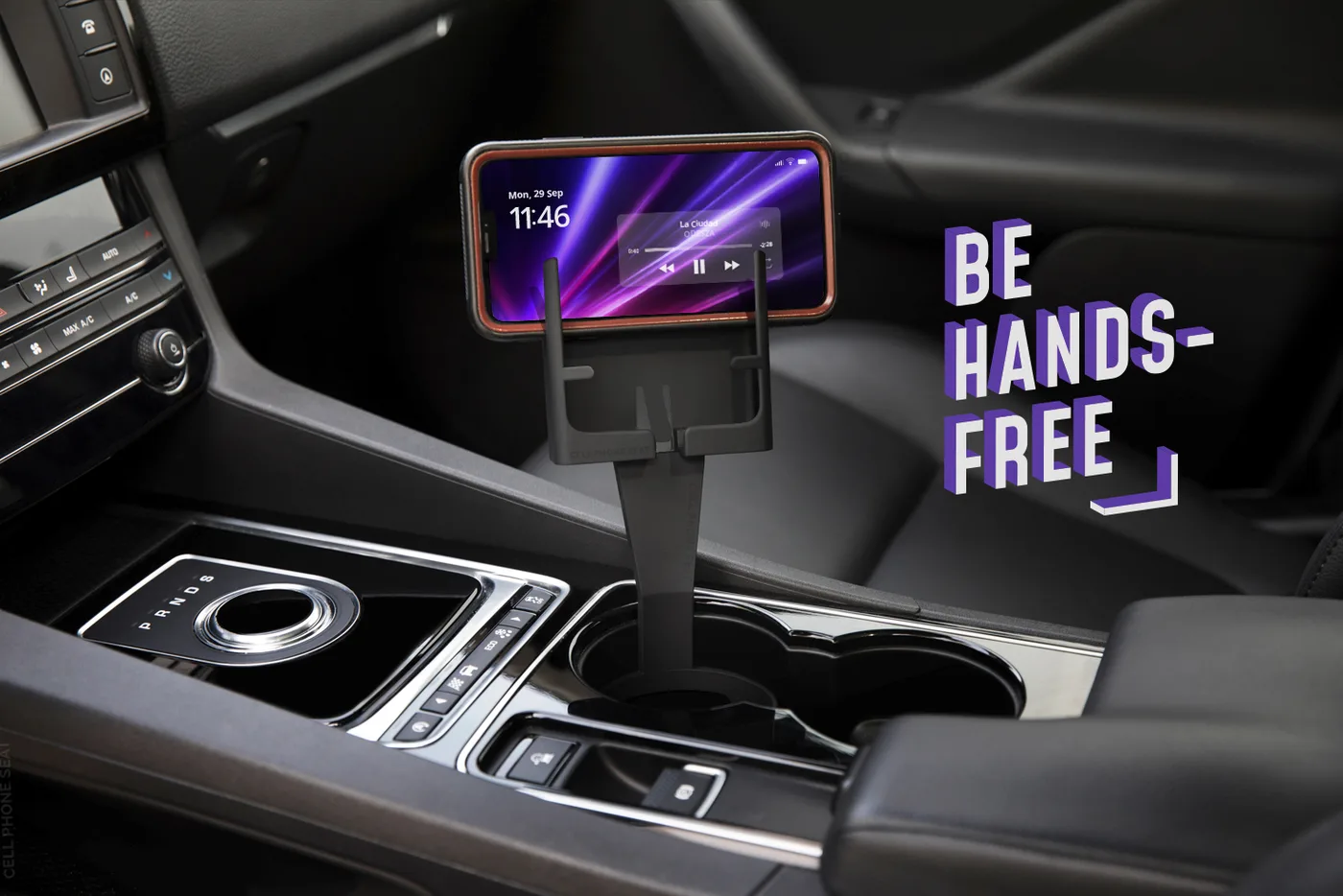
The Cell Phone Seat is a patented cup holder phone mount, made in the USA. It sits in your cup holder: no adhesive, no vent clips. It fits all phones, with or without a case, so there's no removing your protective case every time you drive. The largest phones in thick cases fit horizontally.
It fits every vehicle except the Toyota RAV4 and the Toyota Tacoma (all years). Too snug for a smaller cup holder? Soften the base in hot water following the included instructions, then flex it to fit. Too loose? Email info@cellphoneseat.com and we'll send a free foam kit. You can check your car with the fit checker.
Why Position Matters
A cup holder mount keeps your phone in the center console, off the dash and clear of the windshield. The honest trade-off: it sits lower than a dashboard mount, so set your route before you drive and rely on voice directions for the turn-by-turn.
Making the Smart Choice for Your Car
Look, I get it. Dashboard mounts seem convenient, and you've probably been using one without issues. But "no problems yet" isn't the same as "no problems possible."
Think about what you're really getting:
- A mount that could damage your dashboard
- Potential safety risks if it's near an airbag
- Adhesive that might fail at the worst moment
- Placement rules that depend on your state
Compare that to a simple cup holder solution that avoids all of these.
Your phone mount is something you use every single drive. It's worth getting right.
Frequently Asked Questions
Are dashboard phone mounts illegal?
It depends on your state and on placement. In California, for example, a phone used by hand while driving must be mounted on the windshield in the spots allowed for a GPS, or on the dashboard or center console in a way that does not hinder the driver's view of the road (California Vehicle Code 23123.5). Check your own state's rules.
Can a dashboard phone mount damage my car?
Yes, dashboard mounts with adhesive pads can damage your dashboard surface when removed, leaving residue, discoloration, or pulling off vinyl coating. This damage can be permanent and may reduce your vehicle's resale value. Heat on the dashboard can also weaken the adhesive over time, causing the mount to fail.
What happens if my phone mount is on the airbag?
An airbag deploys with tremendous force, and anything mounted over or near it can be thrown into the cabin. Always check your vehicle manual for airbag locations before mounting anything to your dashboard.
Do dashboard mounts work in hot weather?
Dashboard mounts with adhesive often struggle in heat. The top of the dash sits in direct sun behind the windshield, which softens adhesive and can make the mount let go.
What's the safest place to mount my phone in the car?
Somewhere that doesn't block your view of the road, isn't over an airbag, and doesn't need you to hold the phone. A cup holder mount checks those boxes: it sits in your center console with no adhesive, nothing on the dash and nothing on the windshield. Wherever you mount it, set your route before you drive.